Computer science education needs to evolve. Traditional programming still matters—but it can’t be the whole story anymore. AI literacy, robotics, and IoT projects need to be a bigger part of a computer science curriculum.
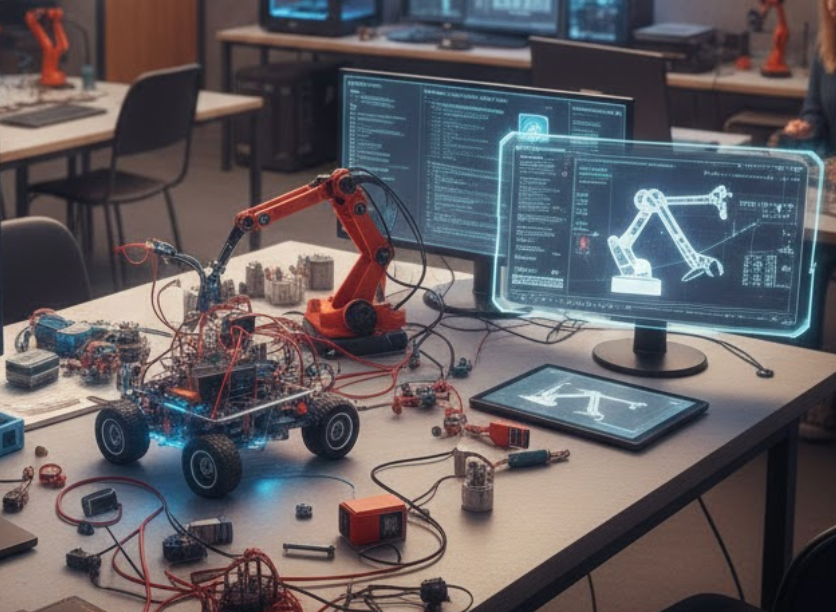
For a while, innovations labs and maker spaces felt like a trend that came and went. However, with today’s AI tools, connecting software to hardware and getting guidance for complex projects is easier than ever. Students can move from idea to working prototype without getting stuck for weeks on small technical hurdles. That changes what’s possible in a classroom.
This is also an area where humans are still very much needed. Designing, building, testing, and refining physical systems requires creativity and real-world problem solving. At least for the foreseeable future, someone still has to wire the sensors, mount the components, troubleshoot the connections, and think through how everything works together.
Using Arduinos, Raspberry Pis, and similar microcontrollers to build things like smart mirrors, energy usage monitors, weather stations that log and visualize local data, or hallway kiosks that display announcements or lunch menus makes computer science feel real and tangible. These kinds of projects combine coding, electronics, design, and critical thinking. Students can see and touch what they built. That matters.
For now, learning to code is still useful, especially because students need to understand what AI is generating and how to debug it when things go wrong. AI-generated code is impressive, but it’s not magical. Knowing how to read it, question it, and fix it is an important skill.
That said, as AI continues to improve, the pure “write everything from scratch” coding skill may become less economically valuable than it once was. There may be fewer financial incentives for students to grind through syntax the way previous generations did.
But coding still has academic value. It builds structured thinking, persistence, and problem-solving skills. The benefits aren’t always obvious in the moment. Much like studying Latin or ancient Greek. You may not use it directly every day, but it shapes how you think.
Going forward, the bigger priority may be teaching students how to harness AI safely and responsibly. They need to understand its strengths, its limitations, its biases, and its risks. Prompting well, evaluating outputs critically, and using AI ethically will be foundational skills.
And alongside that, students should understand how things work in the real world. How does a lawnmower engine operate? How does a sensor detect moisture? What actually happens when you flip a switch? Connecting software to hardware and understanding the physical systems underneath grounds technology in reality.
The future of computer science education shouldn’t be less hands-on. It should be more.